Can You Sell CBD Products in Spain?
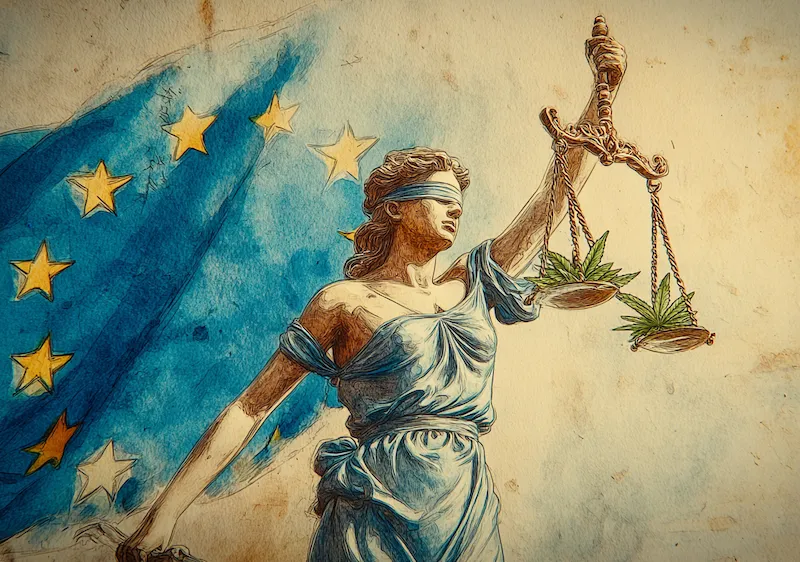
In line with European Union regulations, Spanish law permits the production and sale of CBD products derived from industrial hemp, provided the THC level does not exceed 0.2%. This ensures legal consistency across EU markets. While some autonomous regions have historically explored more tolerant cannabis policies, these local variations do not override national restrictions.
CBD products for topical application, such as creams and CBD balms, are widely available both online and in retail outlets across Spain. This reflects a growing acceptance of CBD while maintaining strict boundaries to ensure safety and consumer protection.
Can You Grow Hemp in Spain?

Spain has developed a strong presence in Europe’s industrial hemp sector, supported by a framework that allows cultivation of low-THC hemp varieties. Licensed growers may cultivate hemp with THC levels below 0.2%, enabling production of fibres, seeds, and topical CBD formulations.
Despite large domestic production, much of Spain’s hemp-derived output is exported to other markets because of local restrictions on ingestible CBD products. This environment offers opportunities for businesses involved in cultivation, processing, and wholesale CBD distribution, provided they navigate Spain’s regulatory requirements carefully.
Legality of CBD Flowers and Buds
Spanish law distinguishes clearly between the sale, possession, and personal use of cannabis. Selling and possessing any quantity remains a criminal offence. However, private consumption is generally tolerated, respecting the principle of privacy within the home.
This tolerance extends to home cultivation, provided plants are kept out of public view. Visible cultivation on balconies or windowsills can lead to fines ranging from EUR 600 to EUR 30,000. Non-profit cannabis clubs have also grown in popularity, operating within legal grey areas to serve registered adult members and contributing to ongoing debates about reform.
Outlook for 2025
Spain’s autonomous communities, such as Catalonia and Madrid, often influence national cannabis policy through regional initiatives and public sentiment. Looking ahead, these regions may push for more balanced approaches that consider public health while recognising the economic and social benefits of regulated cannabis markets.
While comprehensive national legalisation is not currently in place for recreational cannabis or ingestible CBD products, discussions around medical cannabis and broader reforms are expected to continue. Businesses evaluating Spain’s market must account for these evolving dynamics in long-term planning.
THC Limits for CBD in Spain
Under Spanish and EU regulations, CBD products must adhere to a strict 0.2% THC limit to qualify as legal hemp-derived goods. This threshold applies at all stages of production and sale, ensuring consistent compliance with EU rules designed to avoid psychoactive effects.
Businesses should ensure:
-
Careful sourcing of compliant raw materials.
-
Verification of THC levels through accredited third-party testing.
-
Comprehensive documentation to demonstrate compliance during inspections.
Regulatory Agencies and Rules for CBD in Spain
Spain’s CBD regulations are shaped by both national and EU-level authorities that oversee production, marketing, and safety.
Key regulatory bodies include:
-
World Health Organisation (WHO): Shapes international perceptions of CBD’s safety profile.
-
European Food Safety Authority (EFSA): Classifies ingestible CBD as a novel food requiring authorisation.
-
Agencia Española de Medicamentos y Productos Sanitarios (AEMPS): Enforces these requirements nationally.
Businesses must recognise that, under current AEMPS guidelines, CBD cannot be marketed as a food product or dietary supplement. This reflects Spain’s alignment with EFSA’s requirement for pre-market safety assessments and approvals.
World Health Organisation (WHO)
The World Health Organisation plays an important role in shaping global attitudes toward CBD. WHO reviews have concluded that CBD is generally well-tolerated with no significant potential for abuse or dependence. These findings have encouraged broader acceptance of CBD as distinct from THC.
While WHO’s position supports positive regulatory trends, national regulators such as Spain’s AEMPS maintain strict controls on how CBD products are sold and marketed. Understanding this global context helps businesses anticipate future regulatory developments.
European Food Safety Authority (EFSA)
The European Food Safety Authority evaluates food safety risks in the EU and has directly influenced CBD marketing across member states. By classifying CBD in food or supplements as a ‘novel food’, EFSA has imposed pre-market authorisation requirements that effectively limit ingestible CBD sales in Spain.
Enforcement in Spain is carried out by AECOSAN, which ensures compliance with these EU rules. For manufacturers and retail brands, this underlines the importance of clear labelling, reputable sourcing, and adherence to both national and EU law.
Agencia Española de Medicamentos y Productos Sanitarios (AEMPS)
AEMPS governs the approval of CBD products intended as food items or dietary supplements in Spain. Currently, it has not authorised any ingestible CBD products, fully aligning with EFSA’s classification of CBD as a novel food requiring pre-market approval.
Previously, ingestible CBD products were available in Spain, but enforcement has since tightened. Businesses must monitor evolving regulations and ensure their products align with AEMPS guidance to avoid penalties and maintain trust.
Can CBD be Sold as a Food Supplement in Spain?

Under current Spanish regulations, CBD cannot be sold as a food supplement or for ingestion. AEMPS has not approved any ingestible CBD use, limiting legal marketing to topical or cosmetic applications. Products must be clearly labelled for external use to avoid enforcement action.
While these restrictions remain, industry forecasts anticipate growth in Europe’s CBD sector. For businesses targeting the Spanish market, success depends on robust compliance strategies, clear labelling, and sourcing from experienced suppliers who understand these requirements.
Sourcing CBD Products in Spain
Despite restrictions on ingestible products, Spain has a mature market for legal, externally applied CBD items such as creams and balms, available in pharmacies and alternative health shops.
Key sourcing requirements include:
-
Working with accredited, reputable CBD manufacturer.
-
Certificates of Analysis verifying THC content below 0.2%.
-
Comprehensive documentation to prove regulatory compliance.
Ensuring high-quality, compliant CBD sourcing is important not only for meeting legal obligations but also for protecting brand reputation in a competitive, closely monitored market.
Regulations on Importing and Exporting CBD in Spain
Spain’s EU membership means that hemp-derived CBD imports and exports follow EU-wide rules, including the Common Agricultural Policy (CAP). Businesses can generally trade CBD products across borders if they were legally produced in an EU member state and comply with THC limits of 0.2%.
Best practices for cross-border trade include:
-
Maintaining thorough documentation, such as Certificates of Analysis.
-
Staying informed about national guidelines to ensure products meet Spain’s distribution requirements, especially the ban on ingestible CBD without Novel Food authorisation.
Key Aspects of CBD Legality in Spain
Spain’s current rules allow CBD products for topical use only, with THC content strictly limited to 0.2%. While this supports a growing market for creams and balms, ingestible forms remain tightly regulated and require Novel Food approvals.
Businesses entering the Spanish market must prioritise regulatory compliance, careful sourcing, and clear labelling to meet both national and EU regulations while building trust with customers and regulators.